
Youth Voices: Lessons Learned from Survivors While Interning at PACT

By: Hailey Cohen, PACT Youth Intern
This past summer, I had the opportunity to work as an intern for PACT’s Educational Initiatives department. As someone who had little knowledge of human trafficking prior to this experience, I learned a lot about the hold this industry has within both the United States and across the globe.
Over the course of my internship, I worked with the education team to analyze PACT curriculum and conduct research on state policies regarding anti-trafficking education. During my research, I found several state laws and regulations that were obstructive to successful anti-trafficking education.
For example, Florida is the first state to require human trafficking education within schools, with the passage of CS/HB 1237, coming into effect later this summer. However, the recently published 2024 Florida Statutes include a section on sexual education. This update requires any material on reproductive health and diseases to be approved by the Florida Department of Education, with some districts being told they cannot use words like “consent” or “domestic violence”, and are strict on content discussing the LGBTQ+ community. These laws are contradictory, since human trafficking education requires the discussion and understanding of these concepts.
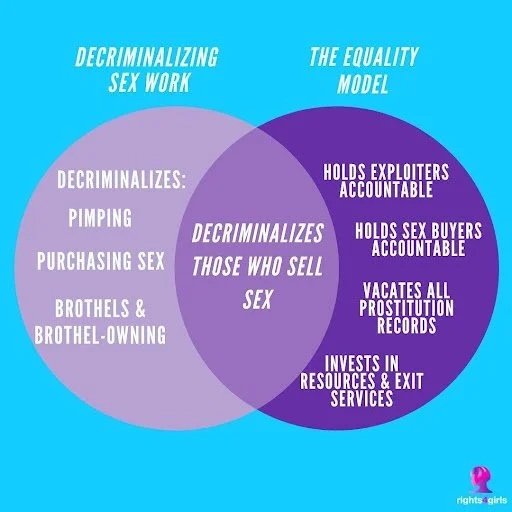
Image from Rights4Girls
In July, I represented PACT at the 8th Annual World Without Exploitation Youth Summit in Washington D.C.. This year’s summit focused specifically on online sexual exploitation, a subject that I had even less of an understanding on. With three different panels, a networking lunch, and several workshop opportunities, it was a very busy but informational day. Throughout the course of the summit, I learned a lot.
One of the topics that stuck out the most to me was criminalization vs. decriminalization. This refers to the debate on what should be done about the issue of commercial sexual exploitation. There are four distinct approaches:
CRIMINALIZATION, which prohibits prostitution; FULL DECRIMINALIZATION, which is the complete removal of criminal penalties relating to the sex trade; LEGALIZATION, in which the city/state government regulates the sex trade; and PARTIAL DECRIMINALIZATION, or The Survivor Model, under which buyers of sexual services are prosecuted but not sellers.
In attendance at the summit was Melanie Thompson, a prominent activist in the fight against commercial sexual exploitation and a member of PACT’s Survivors’ Council.
In January, Melanie took part in a debate on the very subject of whether or not sex work should be decriminalized. According to Melanie, partial decriminalization is the only stance that outlines exit services for victims, and that the very act of commodifying a person whom you are about to engage in sexual acts with should be enough to classify as a crime.
Melanie reminded the audience not to conflate consent with power or money, saying:
“While some may not have had a negative experience in prostitution, just like some may smoke cigarettes and not get cancer, or some won’t wear a seatbelt and end up fine— the reality is that most of us do suffer consequences. We get emphysema or we fly through the windshield… but in prostitution?
We are raped. We are beaten. We are traumatized.”
YFEM (remember, that’s the same thing as the Survivor Model mentioned in this blog!
Did You Know?
The Survivor Model is also referred to as The Nordic Model, The Equality Model, and Partial Decrim.
PACT is a part of New Yorkers for the Equality Model (NYFEM), a survivor-led alliance seeking to implement the Equality Model in New York State. Advocacy is an important part of our work here at PACT. It’s how we help turn youth and survivor voices into stronger laws that protect children and prevent exploitation.
Click here to learn about another PACT Youth Intern’s experience advocating for the Equality Model (remember, that’s the same thing as the Survivor Model!) with NYFEM.
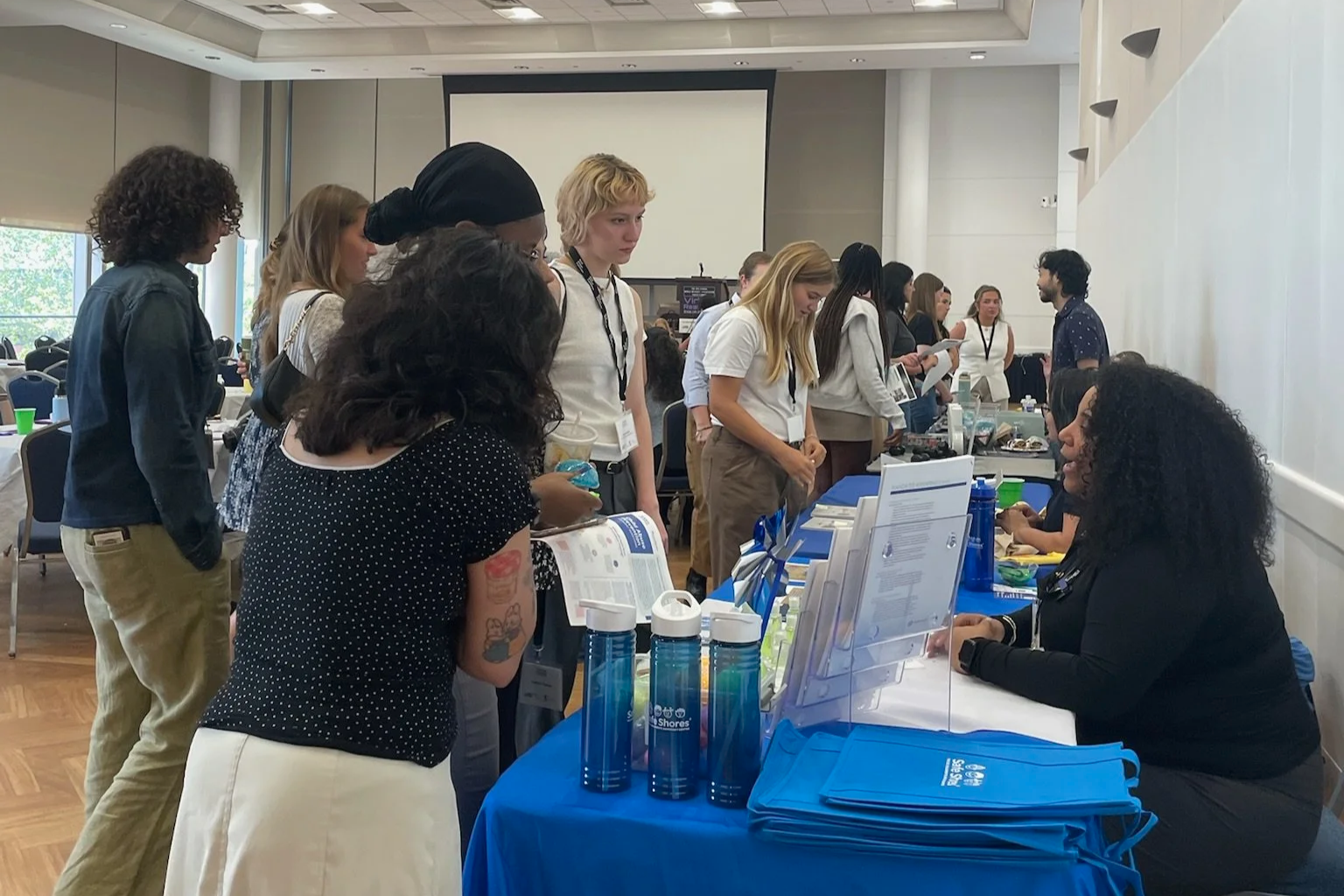
Image of the 2025 Youth Summit from World Without Exploitation
At the summit, Melanie hosted a workshop titled So You Think You’re Sex Positive. Melanie explained how platforms like OnlyFans serve as grooming grounds for younger people and also discussed how AI has further contributed to the sex trade, with webpages like Mr. Deepfakes garnering 17 million monthly viewers. I think that many people, especially around my age, are unaware of the exploitation that occurs online through platforms like OnlyFans and Pornhub. In 2020, Pornhub removed almost 80% of the content from their site that could not be verified. This occurred only after a New York Times report described finding videos of unconscious women and minors.
Attending this summit allowed me to not only hear the opinions of survivors like Melanie, but also allowed me to formulate my own opinions on these topics. In the “crim vs. decrim” debate, I think the survivor model sounds the most ideal. Many women and men are involved in the sex trade involuntarily, either due to trafficking or a lack of financial resources. Holding their actions to the same level as buyers is unjustifiable. And, with technology on the rise, it is clear that sexual exploitation online is an urgent issue.
I am so grateful that I had the opportunity to intern with PACT this summer and conduct my own research, learn from survivors and participate in the WorldWe Youth Summit. I am sure I will make use of everything I have learned this summer as I continue to pursue my career goals!
PACT Survivor Council Member Melanie Thompson will be taking part in another public debate on this topic in September. Until then, you can listen and learn from her here at Exit Wound.